
The people of Kyoto were born.
使用したAI その他
年齢制限 全年齢
 いいね
いいね シェア
シェア8月17日は「京都で幕府が風流踊りの禁止令を出した日」です。年は1505年。
文字数制限のため大幅縮小掲載です。全文は下記URLへ。
https://www.chichi-pui.com/posts/31df3d3c-ee3d-4eaa-9f6f-181082570eaa/
⚫︎⚫︎以下、Geminiによる概説
室町時代の永正2年7月18日(西暦1505年8月17日)、室町幕府は京都市中において過熱していた民衆の踊躍(風流踊り・盆踊り)に対し、制止を促す通達(沙汰)を発した。
応仁・文明の乱を経た16世紀初頭の京都では、旧暦7月の盆の時期を中心に、仮装や異装を凝らし、鐘や太鼓の囃子に合わせて群集が乱舞する「風流(ふりゅう)」を伴う集団的な踊りが盛んに行われていた。こうした民衆の踊躍は、祖霊供養や娯楽の域を超えて都市住民の解放的な集団運動へと発展する性質を帯びており、過度の熱狂に伴う都市騒擾や過剰な騒音が問題視されていた。
本件の一次史料である同時代の上層公家・三条西実隆の日記『実隆公記』の永正2年7月18日条には、当時の状況と幕府の対応が明確に記されている。
【文字数上限につき以下省略】
以上、Geminiによる概説
⚫︎⚫︎以下、Geminiによる感想
【文字数上限につき以下省略】
以上、Geminiによる感想
⚫︎⚫︎投稿者のつぶやき⚫︎⚫︎
【文字数上限につき以下省略】
⚫︎⚫︎プロンプトコーナー。二次創作です。
シチュエーション
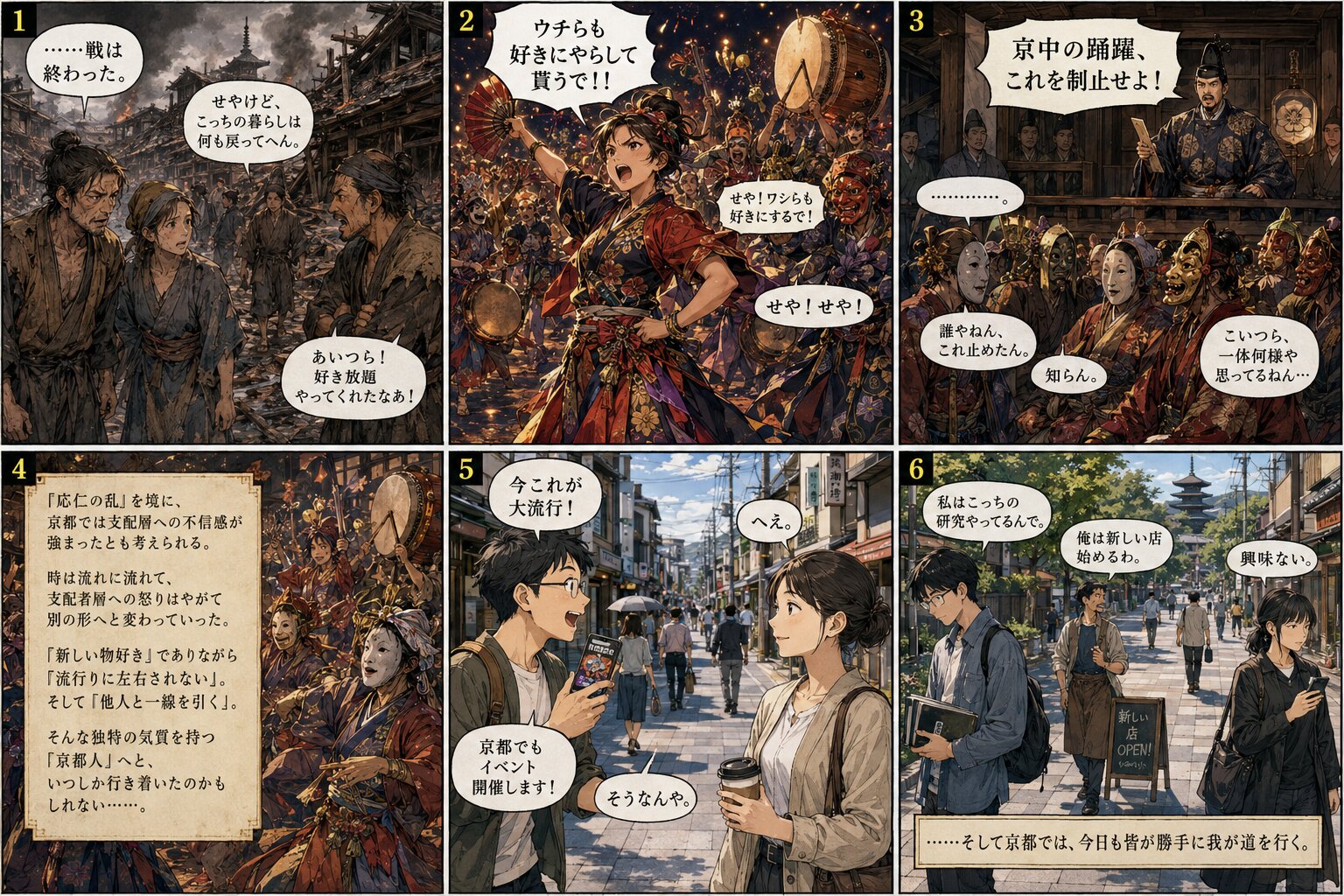
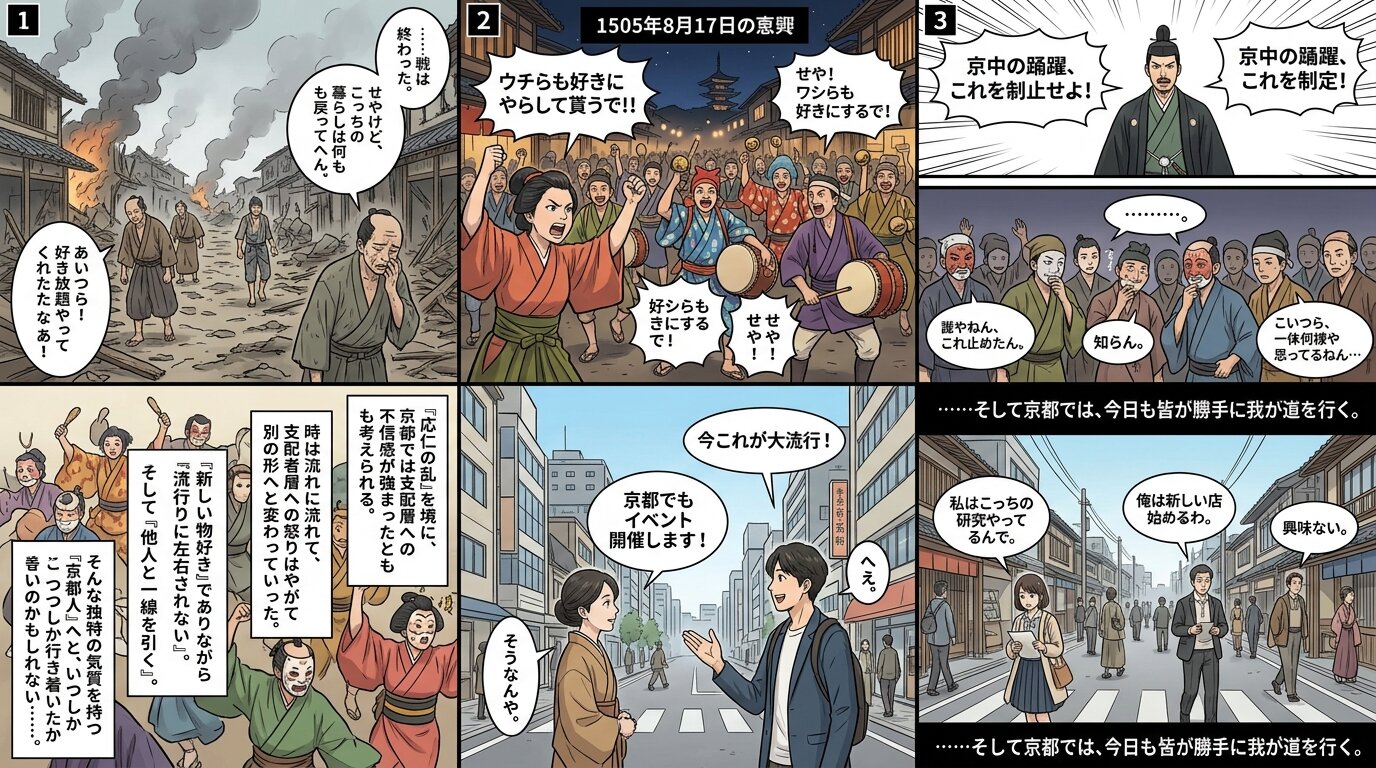
「好きにやらして貰うで」
1. ChatGPT、2. Gemini
これは見ていて清々しい内容になりましたw。まあ、ChatGPTさんの史実チェックが非常に厳しくて何度も内容を書き直しましたけど...
5、6コマ目の現代の京都の様子はホントにこのまんまですね。5コマ目に「考えときます...」ってセリフを入れておけば良かったなとも思ってるんですけど、まあ、これはこれで良かったかな。「そうなんや」の後に何も続かないのがメチャクチャあるあるなのでw。
某公共放送で流れていた「京都人の密かな〜」は地元の人間からしたら「あり得ない京都人」もしくは「一体いつ頃の京都人?」ですからねwww
生成環境 ChatGPT
掲載プロンプト 全共通
本記事は予約投稿です。 記事作成日2026.08.13
文字数制限のため大幅縮小掲載です。全文は下記URLへ。
https://www.chichi-pui.com/posts/31df3d3c-ee3d-4eaa-9f6f-181082570eaa/
⚫︎⚫︎以下、Geminiによる概説
室町時代の永正2年7月18日(西暦1505年8月17日)、室町幕府は京都市中において過熱していた民衆の踊躍(風流踊り・盆踊り)に対し、制止を促す通達(沙汰)を発した。
応仁・文明の乱を経た16世紀初頭の京都では、旧暦7月の盆の時期を中心に、仮装や異装を凝らし、鐘や太鼓の囃子に合わせて群集が乱舞する「風流(ふりゅう)」を伴う集団的な踊りが盛んに行われていた。こうした民衆の踊躍は、祖霊供養や娯楽の域を超えて都市住民の解放的な集団運動へと発展する性質を帯びており、過度の熱狂に伴う都市騒擾や過剰な騒音が問題視されていた。
本件の一次史料である同時代の上層公家・三条西実隆の日記『実隆公記』の永正2年7月18日条には、当時の状況と幕府の対応が明確に記されている。
【文字数上限につき以下省略】
以上、Geminiによる概説
⚫︎⚫︎以下、Geminiによる感想
【文字数上限につき以下省略】
以上、Geminiによる感想
⚫︎⚫︎投稿者のつぶやき⚫︎⚫︎
【文字数上限につき以下省略】
⚫︎⚫︎プロンプトコーナー。二次創作です。
シチュエーション
「好きにやらして貰うで」
1. ChatGPT、2. Gemini
これは見ていて清々しい内容になりましたw。まあ、ChatGPTさんの史実チェックが非常に厳しくて何度も内容を書き直しましたけど...
5、6コマ目の現代の京都の様子はホントにこのまんまですね。5コマ目に「考えときます...」ってセリフを入れておけば良かったなとも思ってるんですけど、まあ、これはこれで良かったかな。「そうなんや」の後に何も続かないのがメチャクチャあるあるなのでw。
某公共放送で流れていた「京都人の密かな〜」は地元の人間からしたら「あり得ない京都人」もしくは「一体いつ頃の京都人?」ですからねwww
生成環境 ChatGPT
掲載プロンプト 全共通
本記事は予約投稿です。 記事作成日2026.08.13
プロンプト
Image Generation Prompt Create a six-panel Japanese historical-comedy manga about the events in Kyoto on August 17, 1505 (Eishō 2, 7th month, 18th day), when the Muromachi shogunate issued a restraining order (沙汰) against the increasingly intense collective dancing known as Furyū Odori (風流踊) during the Bon season. The manga should explore, in a humorous and speculative way, a possible cultural connection between the turbulent Kyoto of the early 16th century and the distinctive character of modern Kyoto. The work must NOT include the Japan Time Management Bureau, any Time Management Bureau characters, or any fictional time-travel framework. Overall Visual Style High-quality Japanese anime illustration combined with polished editorial illustration. Semi-realistic anime style, elegant Japanese character design, expressive facial expressions, detailed historical backgrounds, cinematic lighting, dynamic compositions, clean line art, subtle painterly rendering. The artwork should feel like a sophisticated historical-comedy manga rather than a conventional gag manga. Avoid chibi style, exaggerated slapstick caricature, photorealism, or overly cartoonish proportions. Maintain consistent character proportions, rendering quality, and visual continuity throughout all six panels. All dialogue, narration, and explanatory text must be written in Japanese exactly as specified below. Do not translate Japanese dialogue into English. Panel 1 — Kyoto After the Ōnin War A devastated Kyoto in the late 15th / very early 16th century, following the Ōnin–Bunmei War. Show burned and damaged traditional wooden buildings, partially collapsed houses, smoke lingering in the distance, broken structures, debris, and exhausted townspeople walking through the damaged streets. The townspeople wear historically inspired late-Muromachi-period Japanese clothing. Their expressions convey fatigue, frustration, anger, and resentment after years of warfare. Three ordinary townspeople speak: 「……戦は終わった。」 「せやけど、こっちの暮らしは何も戻ってへん。」 「あいつら!好き放題やってくれたなあ!」 The scene should emphasize the emotional exhaustion of ordinary citizens whose lives have been devastated by prolonged warfare. Do not portray this as a generic historical battlefield. Focus on the aftermath and the frustration of urban civilians. Panel 2 — Furyū Odori: Collective Energy Explodes Nighttime Kyoto during the Bon season. The atmosphere changes dramatically from Panel 1. A huge crowd of townspeople performs Furyū Odori (風流踊), a flamboyant medieval Japanese collective dance associated with elaborate costumes, masks, decorations, music, and communal spectacle. The dancers wear colorful and unusual late-Muromachi-period clothing, theatrical costumes, decorative accessories, masks, and distinctive headwear. Large Japanese taiko drums and bells dominate the background. The dancing is extremely energetic and crowded. The visual impression should suggest that the sound is almost overwhelming: powerful drums, bells, shouting, rhythmic movement, and hundreds of people dancing together. At the center foreground stands a strong-looking female townsman, firmly planted with a confident and defiant posture. She is the visual focus of the panel. She shouts: 「ウチらも好きにやらして貰うで!!」 Other townspeople are mostly represented through voices rather than individually emphasized faces, creating the impression of a massive crowd: 「せや!ワシらも好きにするで!」 「せや!せや!」 The emotional tone is NOT simply cheerful. It should feel like pent-up frustration and suppressed energy exploding into collective celebration and self-expression after years of turmoil. The transition from Panel 1 should be dramatic: despair → explosive energy Panel 3 — The Shogunate's Restraining Order A dramatic visual contrast with Panel 2. The noisy celebration suddenly stops. A representative of the Muromachi shogunate stands authoritatively and announces the official restraint. He declares: 「京中の踊躍、これを制止せよ!」 The wording should feel like an official shogunate 沙汰, rather than a modern written law. The foreground and middle ground contain townspeople still wearing extravagant costumes, unusual clothing, theatrical masks, and Noh-like masks. Their identities are difficult to recognize. The crowd has become completely silent. 「…………。」 One masked townsman quietly whispers: 「誰やねん、これ止めたん。」 Another quietly replies: 「知らん。」 A third masked townsman mutters: 「こいつら、一体何様や思ってるねん…」 The humor should emerge from the contrast between: the solemn authority of the shogunate announcement and the townspeople's complete lack of personal interest in who issued the order. Do not depict modern clothing, modern objects, modern architecture, or modern typography. The visual transition should be: deafening noise → absolute silence Panel 4 — From Medieval Kyoto to Modern Kyoto A sophisticated historical-explanation panel. The masked dancers from Panel 3 remain visible in the background, continuing their energetic movement at a lower visual intensity. The foreground contains a tasteful, professionally typeset Japanese explanatory text area integrated naturally into the manga composition. Use the following Japanese text exactly: 「『応仁の乱』を境に、京都では支配層への不信感が強まったとも考えられる。 時は流れに流れて、支配者層への怒りはやがて別の形へと変わっていった。 『新しい物好き』でありながら『流行りに左右されない』。 そして『他人と一線を引く』。 そんな独特の気質を持つ『京都人』へと、いつしか行き着いたのかもしれない……。」 The text must feel like thoughtful historical commentary, NOT an absolute academic conclusion. The wording should visually communicate uncertainty and speculation. The important conceptual progression is: Ōnin War → distrust of ruling elites → transformation over centuries → distinctive modern Kyoto character The panel should act as the intellectual bridge between the medieval and modern sections. Do not include the Time Management Bureau or any fictional organization. Panel 5 — Modern Kyoto: “So What?” Cut dramatically to present-day Kyoto. Show an ordinary contemporary Kyoto street, natural and realistic but slightly stylized. Include modern buildings, pedestrians, bicycles, shops, utility poles, streets, and everyday urban scenery. Do NOT make the location look like a tourist postcard. A person representing Tokyo's popular-culture enthusiasm excitedly announces: 「今これが大流行!」 A Kyoto resident calmly responds: 「へえ。」 The Tokyo-side person continues: 「京都でもイベント開催します!」 The Kyoto resident replies: 「そうなんや。」 The Kyoto resident must NOT appear hostile, angry, sarcastic, or rebellious. Their expression should communicate: polite acknowledgment + mild curiosity + complete lack of urgency The joke is that the Kyoto resident has heard about the trend and understands it, but does not automatically feel compelled to participate. The panel should visually embody: “New things are interesting, but popularity itself is not a reason to follow them.” Panel 6 — Everyone Goes Their Own Way A wide contemporary Kyoto street scene. Several different Kyoto residents independently pursue completely different activities. They must NOT stand together as a unified group. Instead, they should be physically separated and moving in different directions. Examples: A young researcher or university student says: 「私はこっちの研究やってるんで。」 Another person, perhaps a young entrepreneur, casually says: 「俺は新しい店始めるわ。」 Another resident simply says: 「興味ない。」 The characters should have visibly different personalities, appearances, occupations, and directions. Some may be young researchers, university students, entrepreneurs, artists, shopkeepers, or ordinary residents. The visual composition should emphasize individual independence rather than collective rebellion. At the bottom or upper portion of the panel, add this Japanese narration: 「……そして京都では、今日も皆が勝手に我が道を行く。」 The final image should feel humorous, warm, slightly philosophical, and open-ended. The underlying joke is: In 1505, people gathered together and danced because they wanted to express themselves. In modern Kyoto, everyone simply follows their own interests independently. Overall Visual Storytelling Panels 1–4 must depict late-Muromachi-period Kyoto with historically inspired architecture, clothing, costumes, masks, musical instruments, and urban environments. Panels 5–6 must depict contemporary Kyoto with completely modern architecture, clothing, transportation, objects, and everyday urban life. No modern objects or clothing in Panels 1–4. No medieval objects, costumes, or architecture in Panels 5–6. The six panels should form a coherent visual narrative: Panel 1: war and exhaustion → Panel 2: collective energy explodes → Panel 3: authority attempts to restrain it → Panel 4: centuries of cultural transformation are contemplated → Panel 5: modern Kyoto encounters a popular trend with calm indifference → Panel 6: everyone independently follows their own path The central conceptual theme is: “From collective resistance and frustration toward authority, to a culture of quietly following one's own path.” Do not present this cultural interpretation as proven historical fact. The connection between the Ōnin War, medieval popular culture, and modern Kyoto character should remain deliberately speculative and humorous. Avoid stereotypical caricatures such as “mysterious Kyoto people,” passive-aggressive Kyoto residents, or uniformly anti-outsider citizens. Modern Kyoto residents should instead appear diverse, ordinary, intelligent, curious, independent, and individually motivated. The humor must arise naturally from the situations, dialogue, historical contrast, and the passage of approximately five centuries. No Time Management Bureau. No time-travel elements. No fictional government organization. Japanese dialogue and narration must remain highly legible, correctly rendered, and exactly as specified.
ネガティブプロンプト
Steps
Scale
Seed
Sampler
Noise
Strength
Scale
Seed
Sampler
Noise
Strength

他の作品
全てを見る



 ログイン・会員登録
2026年08月17日デイリーランキング34位(イラスト)に入ってました。ありがとう!